
Insomnia is one of the most common sleep problems affecting people today. Whether it’s trouble falling asleep, waking up frequently during the night, or getting up too early, insomnia can impact anyone—and it often feels like a never-ending cycle. Poor sleep affects mood, productivity, mental clarity, and overall health. Understanding what causes insomnia is the first step toward beating it and restoring healthy sleep patterns.
In this guide, we explore the most common causes of insomnia and evidence-backed strategies that can help you regain control of your nights.
Explore more sleep-related content on our blog.
Contents
- 1 What Is Insomnia?
- 2 Common Causes of Insomnia
- 3 7. Sleep Disorders
- 4 How to Beat Insomnia Naturally
- 4.1 1. Create a Consistent Sleep Schedule
- 4.2 2. Make Your Bedroom Sleep-Friendly
- 4.3 3. Reduce Screen Time Before Bed
- 4.4 4. Manage Stress During the Day
- 4.5 5. Limit Caffeine and Alcohol
- 4.6 6. Stay Active
- 4.7 7. Avoid Heavy Meals Late at Night
- 4.8 8. Create a Relaxing Bedtime Routine
- 4.9 9. Track Your Sleep Patterns
- 5 When to Seek Support
- 6 Final Thoughts
What Is Insomnia?
Insomnia is a sleep disorder where you have difficulty falling asleep, staying asleep, or getting restful sleep even when you have the opportunity to sleep. It can be short-term (acute) or long-term (chronic), depending on how often it happens. According to the Sleep Foundation, insomnia is one of the most common sleep challenges worldwide.
Common Causes of Insomnia
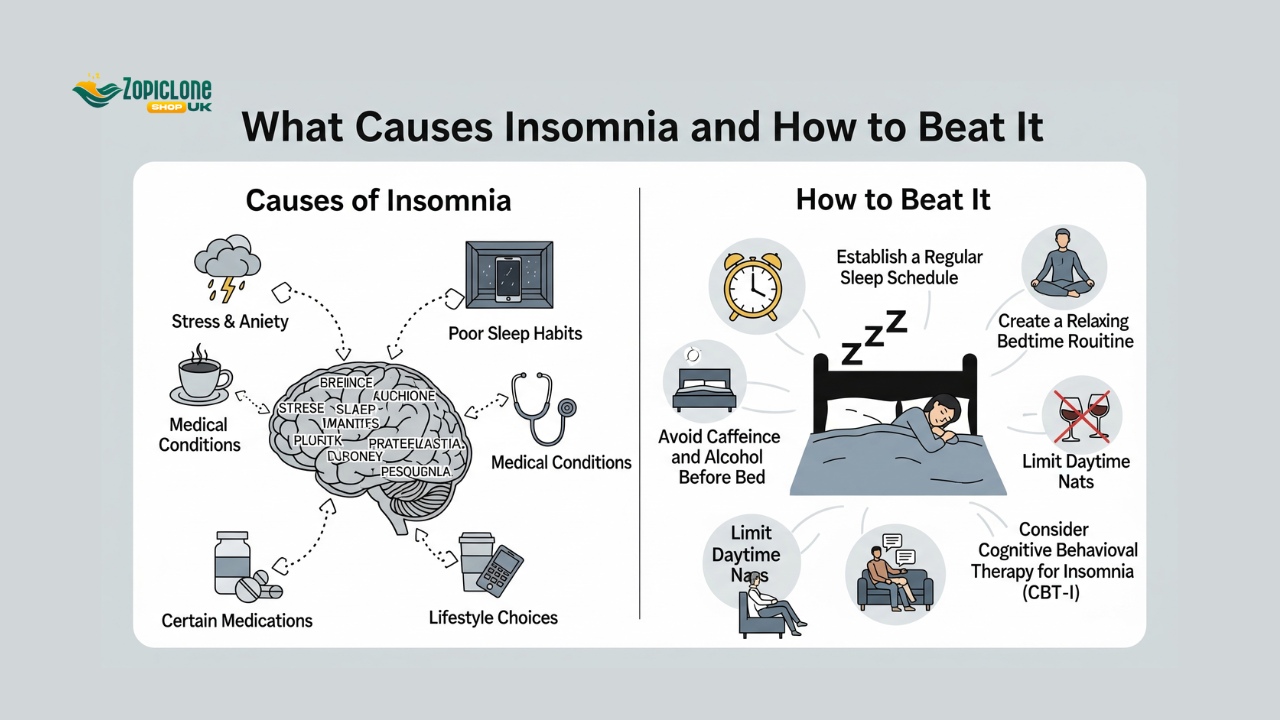
Insomnia usually has more than one trigger. Here are the key reasons many people struggle with disrupted or insufficient sleep:
1. Stress and Anxiety
Stress is the most common cause of insomnia. When your mind is racing, the body remains alert instead of winding down. Anxiety, overthinking, and emotional pressure activate the nervous system, making it difficult to relax enough for sleep.
2. Irregular Sleep Patterns
Going to bed and waking up at inconsistent times disrupts the body’s internal clock. Shift workers, students, and people who often stay up late may struggle to fall asleep when they need to.
3. Poor Sleep Environment
Bright lights, noise, uncomfortable bedding, electronic screens, or an overly warm room can interfere with falling asleep or staying asleep.
4. Lifestyle Factors
Certain habits make insomnia more likely, such as:
- Excessive caffeine intake
- Late-night meals
- Lack of physical activity
- Drinking alcohol before bed
- Long daytime naps
These behaviours interrupt sleep cycles and prevent deep, restorative sleep.
5. Overthinking at Night
Many people experience a busy mind at bedtime. Thoughts about work, relationships, finances, or future plans can keep the brain active long after lying down.
6. Hormonal Changes
Hormones influence sleep. Pregnancy, menstruation, perimenopause, menopause, and thyroid imbalances may all affect sleep quality.
7. Sleep Disorders
Some conditions mimic or worsen insomnia, such as:
- Restless leg syndrome
- Sleep apnea
- Circadian rhythm disorders
These conditions disrupt sleep cycles and prevent the brain from entering deep sleep stages.
8. Medical and Psychological Factors
Illness, chronic pain, depression, and other conditions can interfere with sleep. Mental health and sleep are closely linked—poor sleep can worsen mood, and poor mood can worsen sleep.
How to Beat Insomnia Naturally
While insomnia can be frustrating, many people improve their sleep using simple lifestyle habits and scientifically supported techniques.
1. Create a Consistent Sleep Schedule
Go to bed and wake up at the same time daily, even on weekends. This strengthens your internal clock and helps regulate sleep cycles.
2. Make Your Bedroom Sleep-Friendly
A calm environment helps your brain relax.
- Keep the room cool and dark
- Use comfortable bedding
- Reduce noise
- Remove electronics from the bed area
Small changes can make a big difference.
3. Reduce Screen Time Before Bed
Phones, laptops, and TVs emit blue light, which suppresses melatonin—the hormone responsible for sleep. Try avoiding screens at least one hour before bed.
4. Manage Stress During the Day
Stress relief techniques can help prevent nighttime overthinking. Try:
- Deep breathing exercises
- Meditation
- Light stretching
- Journaling
- Mindfulness
Lowering stress during the day improves sleep at night.
Also Read: Can Insomnia Cause High Blood Pressure? Exploring the Link
5. Limit Caffeine and Alcohol
Caffeine can stay in your system for up to 10 hours, disrupting sleep. Alcohol might make you fall asleep faster, but it reduces sleep quality and increases nighttime awakenings.
6. Stay Active
Regular movement boosts sleep quality and reduces stress. Even 20–30 minutes of walking or light exercise can support better sleep—just avoid intense workouts before bedtime.
7. Avoid Heavy Meals Late at Night
Eating close to bedtime may cause discomfort or indigestion, making it harder to sleep.
8. Create a Relaxing Bedtime Routine
Train your brain to associate nighttime with rest. Examples:
- Warm shower
- Reading a book
- Listening to relaxing music
- Light aromatherapy
These habits help your mind transition into sleep mode.
Also Read: Is Zopiclone a Strong Sleeping Pill? In-Depth Guide for UK Users (2025)
9. Track Your Sleep Patterns
A sleep journal can help you identify patterns, triggers, and habits that affect your sleep.
Write down:
- What time you sleep
- How often you wake
- What you ate or drank
- Stress levels
- Evening routine
Understanding your triggers helps you fix them.
When to Seek Support
If insomnia persists for weeks or begins affecting daily functioning, it’s important to speak with a healthcare professional. Chronic insomnia may require medical evaluation to identify underlying issues like anxiety, hormonal conditions, or sleep disorders.
Getting help early prevents long-term sleep disruption and supports better health overall.
Final Thoughts
Insomnia is a common issue, but it does not have to control your life. By learning what causes insomnia and using practical, healthy, sleep-improving techniques, you can build better sleep habits and enjoy deeper, more refreshing rest.
Small changes—like improving your sleep schedule, reducing stress, and creating a peaceful environment—can make a big difference in how quickly you fall asleep and how rested you feel each morning.
Good sleep is essential for a healthier, more productive life, and with the right strategies, beating insomnia is absolutely possible.
If you’re looking for a trusted and reliable online pharmacy, explore our platform for safe, secure, and discreet service.
Visit: 👉 https://zopicloneshopuk.to/
Also Read: Can Zopiclone Help with Anxiety-Related Sleep Problems?